Most real estate AI training fails because it tries to teach too much at once.
A team gets a big overview of AI tools, watches a few impressive examples, saves a few prompts, and then everyone goes back to the same habits the next week.
That is not a training problem by itself. It is a training design problem.
A useful AI training plan for real estate teams should not start with every tool on the market. It should start with the workflows agents already repeat: lead response, CRM notes, listing marketing, client communication, seller updates, and simple review rules.
If the team cannot use AI on Monday morning, the training was probably too broad.
The Right Way to Think About AI Training for Real Estate Teams
Training should create usable habits, not just awareness.
The goal is not to make every agent an AI expert. The goal is to help the team use AI in a practical, consistent, reviewable way inside real estate work.
That means the training should answer five questions:
- Which workflows should agents use AI for first?
- What inputs do those workflows need?
- What does good output look like?
- What must be reviewed before a client sees it?
- Where will prompts, examples, and standards live after the workshop?
If those questions are not answered, the team may leave excited and still fail to adopt anything consistently.
The latest real estate AI adoption data and implementation analysis shows why training should prioritize repeatable language workflows, total time saved, client experience, cost discipline, and human review rather than a broad tool tour.
What Not to Teach First
Do not start with advanced automation. Do not start with a long tour of tools. Do not start with complicated agent personas, multi-step integrations, or a promise that AI will run the business.
That kind of training usually creates confusion. Agents leave with ideas, but not a first workflow.
Also avoid risky use cases at the beginning. Pricing recommendations, legal language, financial analysis, appraisal-style claims, inspection interpretation, fair housing-sensitive personalization, and unsupervised client communication all need stronger review rules before they become team habits.
The first training should build confidence around low-to-moderate risk work that happens often.
The First Four Workflows to Teach
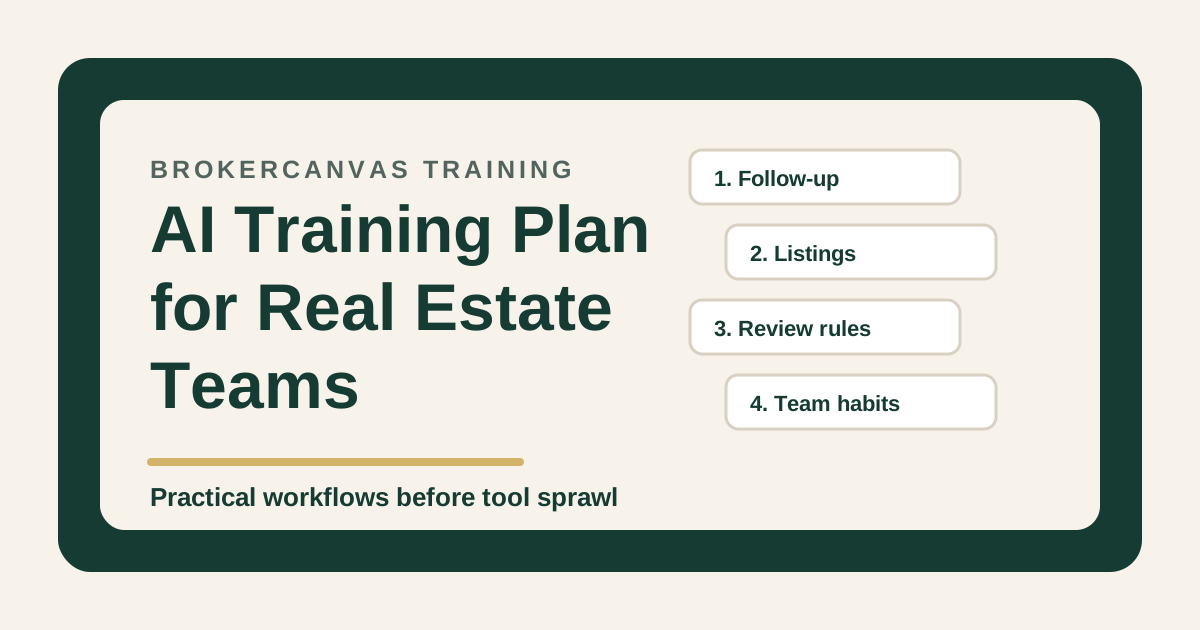
For most real estate teams, I would start with four workflows.
1. Lead response and follow-up
This is usually the best first workflow because it is frequent, practical, and easy to improve.
Teach agents how to turn a lead source, buyer or seller context, timeline, area, last action, and next step into a better first response or follow-up message. The training should show them how to avoid generic "checking in" language and how to keep messages short, useful, and reviewed.
Use the real estate CRM follow-up workflow, stale lead reactivation workflow, and open house follow-up workflow as examples.
2. Listing marketing and property copy
Listing marketing is a strong second workflow because agents already need descriptions, social copy, launch emails, seller approval drafts, and open house promotion.
Teach the team to start from verified property notes. The agent should provide the facts, the positioning angle, the seller-approved improvements, and the channel. AI can help draft and adapt the copy, but it should not invent features or make unsupported claims.
The AI listing descriptions workflow and listing marketing checklist are the baseline here.
3. Client communication and recap emails
This is where AI can make agents feel more organized quickly.
Teach agents how to turn rough notes into a clear recap after a buyer consultation, seller call, showing day, open house, listing prep meeting, or pricing conversation. The output should be plain, accurate, and easy for the client to understand.
Do not let AI create advice beyond the notes. Use it to organize the conversation and draft the message. The agent still owns the substance.
4. Review rules and compliance checks
This is the part many trainings skip. It is also the part that keeps adoption from becoming sloppy.
Teach the team a simple review rule: anything client-facing, listing-facing, pricing-related, visually edited, or compliance-sensitive gets reviewed before use.
The real estate AI compliance checklist should be part of the first training, not an afterthought.
A Practical 90-Minute Team Workshop Agenda
If I had 90 minutes with a real estate team, I would not try to cover everything. I would make the workshop narrow and usable.
Minutes 0 to 10: Set the rules
Explain what AI is allowed to support and what it should not replace. Make the human review standard clear. AI supports professional judgment. It does not replace agent judgment, broker guidance, MLS rules, legal advice, tax advice, lending advice, appraisal work, inspection expertise, or compliance review.
Minutes 10 to 25: Show one bad example and one better example
Use a generic lead follow-up message first. Then show how the same message improves when the prompt includes source, timeline, area, motivation, last action, and next step.
This teaches the lesson quickly: better inputs create better outputs.
Minutes 25 to 45: Practice follow-up
Give agents one real or realistic lead scenario. Have them draft an AI-assisted follow-up email, text, and CRM note. Then review the output for tone, facts, next step, and risk.
Minutes 45 to 65: Practice listing marketing
Give the team a verified property brief. Have them draft a listing description, social caption, launch email, and seller approval note. Then review for unsupported claims, fair housing-sensitive language, accuracy, and MLS/brokerage rules.
Minutes 65 to 80: Build a shared prompt standard
Turn the best examples into one team prompt pattern. Keep it simple enough that agents will actually use it.
Minutes 80 to 90: Assign the first habit
Do not end with "go use AI." End with a specific habit: every agent uses the approved follow-up prompt for one lead source this week, saves the best output, and brings one example to the next team meeting.
The 30-Day Training Reinforcement Plan
A workshop is not the whole training plan. It is the start.
The next 30 days should be about repetition.
Week 1: One follow-up habit
Choose one lead source. Agents use the approved prompt, review every message, and log the final version in the CRM. The manager reviews a few examples for quality.
Week 2: One listing marketing habit
Use a property brief template before drafting. Agents practice turning verified notes into listing copy, social posts, and seller approval drafts.
Week 3: One client recap habit
Agents use AI to turn rough meeting notes into a clear recap email. The focus is accuracy, tone, and next steps.
Week 4: One team review habit
The team reviews examples together. Keep the best prompts. Cut the weak ones. Update the standard. Decide which workflow comes next.
Example Prompt: Build a Team AI Training Plan
Use this if you are a team lead, broker owner, operations manager, or trainer planning your first AI session.
You are helping me build a practical AI training plan for a real estate team.

Role:
Act as a real estate AI training advisor. Focus on practical workflows, simple adoption, risk-aware review rules, and exercises agents can use immediately.

Team context:
- Team size:
- Agent experience level:
- Main business model:
- Current CRM:
- Current AI tools, if any:
- Main workflow problems:
- Lead sources:
- Listing volume:
- Current training format:
- Brokerage or compliance rules to consider:

Training goals:
- What agents should be able to do after training:
- Workflows we want to improve first:
- Outputs we want agents to create:
- Review rules we need:
- Follow-up habit we want after the session:

Requested output:
1. Recommended first three training workflows.
2. What not to teach yet.
3. A 90-minute workshop agenda.
4. One hands-on exercise for each workflow.
5. Prompt template structure for the team.
6. Human review checklist.
7. 30-day reinforcement plan.
8. Manager follow-up questions for weekly meetings.
9. Risks, missing information, and decisions to make before training.
What the Team Should Leave With
A good training session should produce assets, not just notes.
At minimum, the team should leave with:
- one approved lead follow-up prompt
- one property brief template
- one client recap prompt
- one review checklist
- one shared folder or doc for approved examples
- one weekly habit for the next 30 days
If the training does not produce reusable assets, the team will probably recreate the same work later.
Where Tools Fit
Tools come after workflow clarity.
Once the team knows what it is trying to improve, it can decide whether it needs a general AI assistant, a prompt pack, a staging tool, a property analysis tool, a CRM add-on, or a more structured training system.
For tool selection, use the best AI tools by workflow guide and the real estate AI tools hub. For prompt structure, the BrokerCanvas Prompt Pack can help agents start with better examples instead of blank prompts.
If the team is not sure what to train first, the AI Readiness Audit is the better starting point. If the team already knows the workflows and wants hands-on adoption, the AI Implementation Sprint may be the better fit.
Where This Fits in the BrokerCanvas System
This article sits between strategy and execution. The AI readiness scorecard helps a team diagnose where it stands. The 30-day AI implementation plan helps structure rollout. This training plan helps decide what agents should actually learn first.
For individual agents, the full BrokerCanvas training is the deeper path. For teams and brokerages, start with BrokerCanvas services if you want a workshop, audit, implementation sprint, or monthly AI ops support.
The Best First Step
Pick one workflow for the first training.
For most teams, that should be lead follow-up or listing marketing. Both happen often. Both affect revenue. Both give agents immediate practice. Both can be reviewed without making AI responsible for final judgment.
Teach one workflow well. Build one shared prompt. Review one set of examples. Repeat it for 30 days.
That is how training becomes a habit instead of another meeting.
Final Takeaway
A strong AI training plan for real estate teams is not a tool tour. It is a practical curriculum built around the work agents already do.
Start with follow-up, listing marketing, client communication, and review rules. Keep the examples real. Keep the prompts simple. Make agents practice. Then reinforce one habit at a time.
That is how a team moves from AI interest to AI adoption.