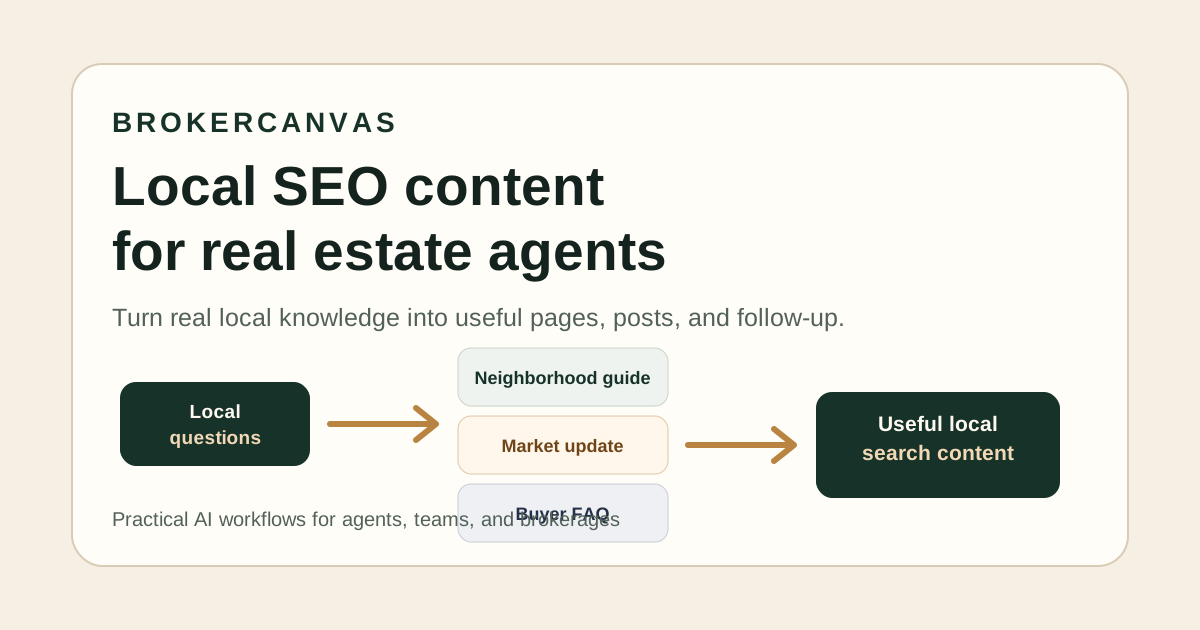
Most real estate local SEO content has the same problem as bad social content.
It is technically published, but it does not prove much.
A page says "best neighborhoods in [city]." A blog post says "the market is changing." A community guide lists a few parks, schools, and restaurants with no real point of view. The agent gets content on the site, but the reader does not get much help.
AI can make that problem worse if you use it lazily. It can also make local SEO content easier if you use it the right way: as a drafting and organization assistant for real local knowledge.
The win is not more local content. The win is local content that sounds like you actually work there.
The Right Way to Think About Local SEO With AI
Local SEO for real estate agents is not about tricking search engines with city names. It is about answering the questions buyers, sellers, relocators, investors, and homeowners actually ask about a market.
AI can help you organize those questions, outline useful pages, turn notes into drafts, and repurpose one strong local idea into several formats. It should not invent neighborhood facts, school claims, commute times, crime claims, pricing trends, or demographic statements.
The agent still owns the local judgment.
If you do not add real observations, current examples, and a practical point of view, AI will give you a page that could have been written for any city in America. That is not a moat.
The AI search optimization guide for real estate agents connects this local editorial work to crawl access, business-fact consistency, internal links, legitimate corroboration, and citation measurement across AI-assisted search.
What Local SEO Content Should Actually Do
A useful real estate local SEO page should help a reader make a better decision.
That can mean:
- understanding the difference between two neighborhoods
- learning what a price point usually buys in an area
- seeing what sellers should know before listing in a specific micro-market
- getting a plain-language explanation of inventory, days on market, or concessions
- knowing what questions to ask before choosing a neighborhood
- understanding local listing prep factors that matter in that market
That is much stronger than publishing another generic "living in [city]" article with no useful angle.
What AI Should Not Do
Be careful here. Local real estate content can create risk when it gets lazy or too confident.
Do not use AI to:
- invent neighborhood details you have not verified
- make school-quality, crime, safety, demographic, or protected-class claims
- state market data without a current source
- claim a neighborhood is "perfect for families" or other fair housing-sensitive language
- publish pricing advice without checking actual comps and current conditions
- turn every city page into the same article with swapped place names
AI should support the workflow. It should not replace local expertise, broker review, MLS accuracy, fair housing awareness, or professional judgment.
The real estate AI compliance checklist is the right companion piece before you publish client-facing or public-facing local content.
A Practical Local SEO Content Workflow
This is the simple system I would build first.
Step 1: Start with real questions
Do not start with keywords first. Start with questions you actually hear.
- What neighborhoods should we consider if we want more space?
- What does $500,000 usually buy here?
- Which areas have older homes versus newer construction?
- What should sellers prep before listing in this neighborhood?
- Why are some homes sitting while others sell quickly?
- What should a relocating buyer understand before touring?
These questions are better raw material than generic keyword lists because they come from real conversations.
Step 2: Choose one local angle
One page should have one job. Pick an angle:
- neighborhood guide
- buyer FAQ
- seller prep guide
- monthly market update
- price-point guide
- new-construction overview
- relocation guide
- listing prep checklist for a specific property type
If you try to make one article answer every local question, it becomes thin everywhere.
Step 3: Gather local inputs before prompting AI
This is the part most agents skip.
Before you ask AI to draft anything, collect:
- the neighborhood, city, or market area
- who the page is for
- three to five real buyer or seller questions
- current market notes you can verify
- common property types
- local showing or listing-prep observations
- what you want the reader to do next
- what not to say because it would be inaccurate or risky
This is where your voice enters the article. AI cannot know what you have seen in showings, listing appointments, inspections, or pricing conversations unless you tell it.
Step 4: Draft for usefulness first
Ask AI for a useful outline before a full draft. Then remove anything generic.
Generic signs include:
- "vibrant community"
- "something for everyone"
- "close to amenities"
- "highly desirable area"
- "perfect for families"
- "hidden gem"
Some of those phrases are weak. Some can create fair housing problems. Either way, they do not sound like a serious local expert.
Step 5: Add reviewable local proof
Useful local content needs proof. That does not mean you need a giant research report.
It can be simple:
- a verified market stat
- a current listing pattern
- a common showing objection
- a listing-prep issue you see often
- a question sellers keep asking
- a decision point buyers should understand
Do not overstate it. Be specific and calm.
Step 6: Connect the page to a next step
Every local SEO page should route the reader somewhere useful:
- a buyer consultation
- a seller pricing conversation
- a market update signup
- a home prep checklist
- a relevant guide or training resource
For BrokerCanvas, the right monetization path is the same principle: useful content first, then a next step that fits the reader's intent.
Local SEO Content Ideas That Are Worth Writing
Use these as starting points, not titles to copy blindly.
Neighborhood decision guides
Help buyers compare areas based on real decision points: property type, commute patterns, home age, yard expectations, inventory, renovation needs, or price bands. Avoid steering language and protected-class assumptions.
Price-point guides
Explain what a certain budget tends to buy in a market. Keep it current and review the data. This is useful because buyers often search with budget questions, not just neighborhood names.
Seller prep guides by area
Explain what sellers in a specific neighborhood or property type should think about before listing. This can connect naturally to listing prep, pricing, photos, and market analysis.
Monthly market updates
Do not write a generic market update. Pick one question: inventory, price reductions, concessions, days on market, buyer activity, or listing prep. One useful point beats five vague paragraphs.
Relocation FAQs
Relocating buyers need plain explanations of process, property types, timing, and questions to ask. Keep the content practical and avoid claims that drift into protected-class or lifestyle assumptions.
Example Prompt: Local SEO Content Brief
Use this before writing. The brief matters more than the draft.
You are helping me create a local SEO content brief for a real estate website.

Role:
Act as a practical real estate content strategist. Help me turn real local expertise into a useful article or page outline.

Guardrails:
- Do not invent local facts, market data, school claims, commute times, crime/safety claims, demographics, or pricing trends.
- Do not use fair housing-sensitive language such as "perfect for families."
- Do not make legal, tax, lending, appraisal, or investment advice claims.
- Flag any claim that needs verification.
- Keep the content useful, specific, and non-hypey.
- The agent will review and add local judgment before publishing.

Local market:
- City or neighborhood:
- Audience: [buyer / seller / relocator / investor / homeowner]
- Content angle:
- Real questions clients ask:
- Current market notes I can verify:
- Property types common in this area:
- Showing/listing observations:
- What readers should understand after reading:
- Next step I want readers to take:
- Topics or claims to avoid:

Requested output:
1. Recommended SEO title.
2. Meta description.
3. H1.
4. H2 outline.
5. Local details I should add manually.
6. Claims that need verification.
7. Internal links to include.
8. Soft CTA ideas.
9. A short draft introduction in a calm, practical tone.
Example Prompt: Turn Local Notes Into a Draft
Use this after you have a brief and real notes. Do not ask AI to make up the market.
You are helping me draft a local real estate SEO article from my notes.

Topic:
[Insert topic]

Audience:
[buyer / seller / relocator / investor / homeowner]

My local notes:
[Paste verified notes, examples, observations, and questions]

Required framing:
- Useful and plain-language.
- Specific to the local market.
- No hype.
- No fair housing-sensitive language.
- No invented market stats.
- No unsupported school, crime, safety, demographic, or commute claims.
- Mention uncertainty where data needs review.

Requested output:
1. Draft article with H2 sections.
2. Places where I should add a current stat or example.
3. Phrases that may be too generic.
4. Compliance-sensitive phrases to review.
5. A short CTA for a buyer or seller consultation.
6. A social post version.
7. An email newsletter version.How to Turn One Local Idea Into a Content System
Do not publish once and move on. Turn one useful local topic into a small system.
Example: "What $500,000 buys in [market]."
- Long-form article: explain the market and buyer tradeoffs.
- Email: send a short market note to active buyers.
- Social post: summarize three practical points.
- Seller version: explain how buyers at that price point compare options.
- CRM note: tag buyers who care about that price range.
This is where AI is genuinely useful. It can help repurpose a strong local idea into several formats. But the idea still needs to be grounded in real local knowledge.
The real estate AI content calendar shows how to schedule this without turning your marketing into a volume machine.
Where This Fits in BrokerCanvas Workflows
Local SEO content connects to multiple real estate AI workflows.
Use the AI market analysis and listing pricing workflow when your local content needs current pricing context. Use the AI listing descriptions workflow when a local angle needs to connect to a listing launch. Use the AI compliance checklist before publishing anything public-facing.
If you want a deeper system for turning local expertise into repeatable content, the full BrokerCanvas training is the natural next step. For a team or brokerage, the AI workshop can help standardize content, review rules, and prompt habits across multiple agents.
The Best First Step
Pick one neighborhood, one audience, and one real question.
For example: "What should sellers in [neighborhood] know before listing this spring?"
Write ten bullet points from your own experience before opening AI. Then use AI to organize the notes into a brief. Add current data, remove generic phrases, review for compliance, and publish something useful.
That is the habit. Local knowledge first. AI second.
Final Takeaway
AI can help real estate agents create better local SEO content, but only when the agent brings the local expertise.
Do not publish filler with city names sprinkled in. Answer real questions. Add reviewable local detail. Avoid risky claims. Give the reader a next step.
That is how local SEO content starts sounding less like the internet and more like a real agent who knows the market.