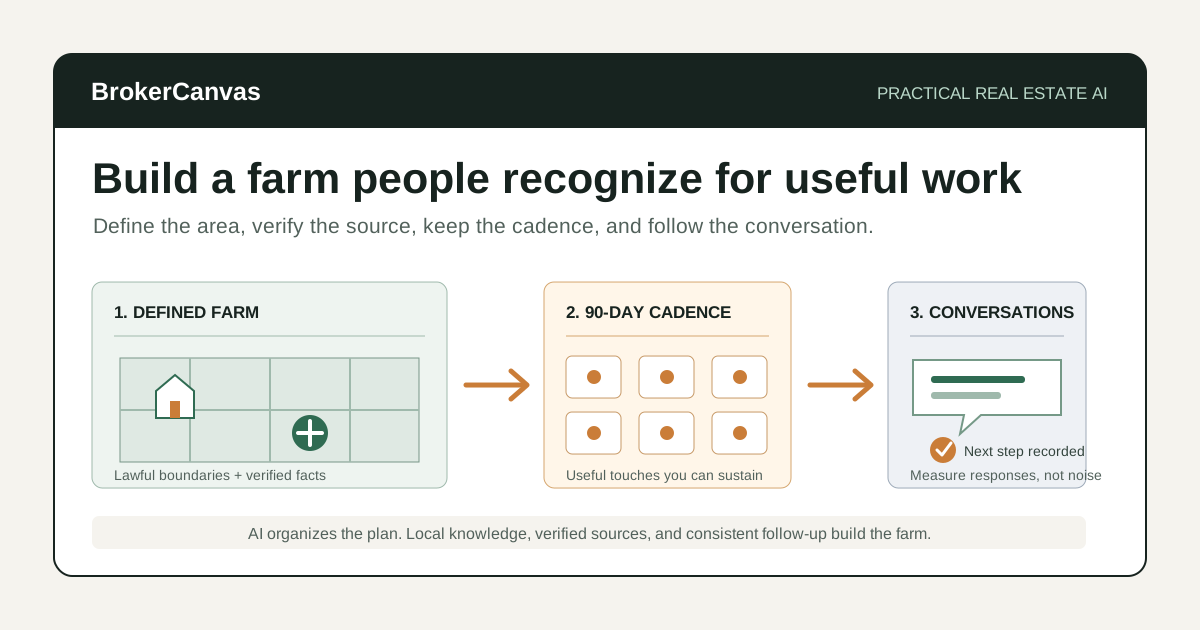
Most real estate farming plans do not fail because the agent picked the wrong postcard.
They fail because the plan never becomes a system. One market update goes out. A just-listed card follows two months later. The agent posts a restaurant photo, misses the next three weeks, and then starts over with a new template.
AI geographic farming for real estate agents can help organize the work. It can turn verified local notes into a 90-day calendar, adapt one useful idea across mail, email, social, and video, and keep the next action visible.
It cannot choose a farm based on protected-class data, invent neighborhood facts, make housing guarantees, or replace the local conversations that make farming work.
My rule is simple: use AI to make the farming plan more consistent, not to make the neighborhood sound more marketable than it really is.
What Geographic Farming Actually Requires
A geographic farm is a defined area where an agent builds recognition and useful market knowledge over time. The area might be a subdivision, condo community, group of nearby streets, or another clearly bounded local market.
The work is not just mailing. A practical farm plan combines:
- reliable property and market information
- consistent homeowner communication
- local visibility and relationships
- clear follow-up when someone responds
- a way to measure whether the work is creating conversations
The value comes from repetition and relevance. One clever campaign is less useful than six months of accurate, recognizable communication.
I would rather own a smaller farm I can serve consistently than claim a large area I only contact when I need a listing.
Where AI Helps in a Real Estate Farm
AI is useful when the inputs are real and the task is specific.
It can help an agent:
- organize verified market notes into homeowner-friendly explanations
- group recurring homeowner questions into content themes
- build a 30-, 60-, or 90-day communication calendar
- adapt one approved market insight for email, direct mail, social, and video
- draft follow-up messages after a reply, event, or valuation request
- create checklists for recurring farm activities
- summarize campaign notes and identify missing follow-up
- prepare a monthly review of what produced real conversations
The useful role is planning, drafting, and organization. The agent still supplies the local knowledge, verifies the facts, handles the conversations, and decides what should be published.
What AI Should Not Do in Geographic Farming
Neighborhood marketing creates real fair housing, privacy, advertising, and trust concerns. A polished output is not automatically an appropriate one.
Do not ask AI to:
- select neighborhoods based on race, color, religion, sex, disability, familial status, national origin, or another protected characteristic
- describe an area as safe, family-friendly, exclusive, prestigious, perfect for a type of person, or free from a type of person
- infer household composition, income, ethnicity, religion, disability, age, or motivation from names, photos, records, or online behavior
- invent turnover, pricing, school, commute, amenity, crime, development, or market facts
- claim an agent is the neighborhood expert without evidence supporting the statement
- promise appreciation, demand, sale price, timing, or a specific marketing outcome
- scrape or process personal information in ways your brokerage, vendors, or applicable rules do not permit
- send autonomous messages without review, consent, suppression, and opt-out controls where required
Choose and market a farm using lawful, business-relevant criteria. Review federal, state, local, brokerage, MLS, advertising, telemarketing, email, and privacy requirements that apply to the channel and data you use.
A Practical 90-Day AI-Assisted Farming Workflow
Step 1: Define the farm with business facts
Start with an area you can realistically learn and serve.
Useful considerations may include:
- clear geographic boundaries
- property count and housing type
- verified transaction activity over a meaningful period
- current listing competition
- your existing relationships and legitimate market experience
- travel time and ability to attend local activities
- the cost and capacity required to communicate consistently
Do not ask AI to recommend a neighborhood from demographic profiles. Give it lawful operational facts and ask it to compare workload, communication opportunities, and your ability to sustain the plan.
Step 2: Build a verified farm brief
Create one source document before generating content.
Include:
- farm name and boundaries
- property types and approximate property count
- verified active, pending, and sold market observations
- seasonal homeowner questions
- local events or public resources with confirmed dates and links
- common property features or maintenance considerations you can verify
- your services and the questions you can responsibly answer
- sources, dates, and items that still need confirmation
Keep facts, observations, and ideas separate. “Three listings reduced price this month” is a dated observation. “Sellers are desperate” is an unsupported conclusion.
Step 3: Choose three communication lanes
A farm gets repetitive when every message is a market report or a listing announcement.
I would start with three lanes:
- Market clarity: explain one verified local change without overstating it.
- Homeowner usefulness: answer a practical ownership, preparation, or selling-process question.
- Local connection: share a confirmed event, public resource, business story, or community update without steering language.
Listings, sales, reviews, and agent news can support the plan, but they should not be the only reason residents hear from you.
Step 4: Set a cadence you can keep
A 90-day plan does not need daily content.
A manageable monthly rhythm might include:
- one direct-mail piece
- one market email
- two short local social posts
- one homeowner education video
- one in-person or relationship activity
- one follow-up block for replies and new conversations
That is six useful touches, not six versions of “Are you thinking of selling?”
Pick the channels you can operate well. Adding a channel without a response process creates more activity, not a better farm.
Step 5: Build one source-backed idea at a time
Before asking AI to draft, write the source note.
For a market update, record the area, reporting period, data source, relevant counts, comparison period, uncertainty, and practical homeowner question.
For a local post, save the official event or resource link, date, organizer, location, and any details that should not be assumed.
For homeowner education, separate general information from property-specific advice that requires an agent, contractor, lender, tax professional, attorney, insurer, inspector, appraiser, or another qualified professional.
Step 6: Draft for the channel, then rewrite
Direct mail, email, video, and social should not receive the same copy.
- Direct mail: one clear point, useful context, readable type, and a low-pressure next step.
- Email: a useful subject line, short explanation, source context, and a reply invitation.
- Video: one spoken idea with a clean opening and visual evidence.
- Social: the useful takeaway without stripping away the qualification or source.
Read every draft aloud. Remove generic phrases, fake familiarity, dramatic market language, and anything you would not say to a homeowner in person.
Step 7: Connect replies to a real follow-up system
The campaign is not finished when someone scans a code, replies to an email, or asks for a market update.
Record:
- what the person asked for
- the source and date of the response
- what you sent
- what remains unanswered
- the agreed next step
- communication preferences and opt-out status
Use the real estate CRM follow-up workflow to keep those conversations from disappearing into an inbox. Use the past-client and sphere follow-up workflow for people in the farm who already know you.
Step 8: Review conversations, not just impressions
At the end of each month, look for evidence that the plan is becoming useful.
Track:
- homeowner replies and questions
- market update or valuation requests
- substantive website visits or guide downloads
- event conversations and follow-up permission
- listing appointments or future-timing conversations
- referrals and introductions
- email engagement, direct-mail response, and opt-outs
- contacts that need a clear next action
Reach and impressions can help diagnose distribution. They are not the business result by themselves.
If a topic produces questions, build on it. If a channel creates activity but no useful conversations after a fair test, change the message, offer, list quality, cadence, or channel.
Example Prompt: Build a 90-Day Real Estate Farming Plan
Use verified business and market information. Remove personal information the tool does not need.
You are helping a real estate agent build a practical 90-day geographic farming plan.

Role:
Act as a marketing operations assistant. Organize verified local information into a consistent communication and follow-up plan. Do not select or describe audiences using protected-class characteristics.

Farm area:
- Name or internal label:
- Geographic boundaries:
- Approximate property count:
- Property types:
- Verified market observations and dates:
- Current listing competition:
- Existing agent relationships or experience:
- Available monthly budget:
- Available hours per week:

Verified local source notes:
[paste facts, sources, dates, public events, homeowner questions, and local observations]

Agent services:
[list]

Available channels:
[direct mail / email / social / video / events / door-to-door where permitted / other]

Guardrails:
- Use only the verified source notes.
- Do not infer or target race, color, religion, sex, disability, familial status, national origin, or another protected characteristic.
- Do not use steering language or describe who should live in the area.
- Do not make school, crime, safety, demographic, appreciation, demand, price, timing, or outcome claims.
- Do not invent local facts, event details, testimonials, sales, or market statistics.
- Mark missing information as a verification item.
- Flag content that needs brokerage, MLS, advertising, privacy, email, telemarketing, platform, or local review.
- Keep the tone calm, useful, specific, and low-pressure.

Create:
1. A one-sentence objective for the 90-day plan.
2. Three communication lanes: market clarity, homeowner usefulness, and local connection.
3. A 12-week calendar with topic, source, channel, audience need, call to action, and follow-up step.
4. One direct-mail concept per month.
5. One market email per month.
6. Two social or video ideas per month.
7. One relationship or in-person activity per month.
8. A response-handling workflow.
9. A monthly measurement scorecard focused on conversations and next steps.
10. A list of facts, permissions, and compliance items to verify before launch.
Example Prompt: Turn One Farm Update Into Four Channels
Use this after the market note has been reviewed and approved.
Adapt this verified geographic farm update for four communication channels.

Approved source note:
[paste the reviewed market or homeowner update]

Source and date:
[paste]

What the data supports:
[list]

What the data does not prove:
[list]

My normal voice:
- Direct
- Calm
- Useful
- Specific
- Not salesy

Rules:
- Preserve the verified facts, source context, dates, and uncertainty.
- Do not add urgency, predictions, superlatives, demographic language, safety claims, or promises.
- Do not imply private knowledge about a homeowner.
- Do not invent an event, sale, testimonial, or local detail.
- Use a low-pressure next step.

Create:
1. A direct-mail version under 140 words.
2. An email with three subject-line options.
3. A 45-second spoken video script.
4. A social post under 120 words.
5. A reply template for someone who asks what the update means for their property.
6. A fact-check list for the agent.A Simple 30-Day Farm Content Example
The exact topics should come from your verified source brief. The structure can stay consistent.
Week 1: Explain one market change
Send a short email explaining one verified change in active inventory, pending activity, days on market, concessions, or pricing behavior. Include the reporting period and source. Invite homeowners to reply if they want a property-specific review.
Week 2: Answer one homeowner question
Record a short video answering a question such as what to prepare before requesting a pricing review, how to think about pre-listing repairs, or what documents make a future sale easier. Keep professional boundaries clear.
Week 3: Share one confirmed local resource
Share a public event, municipal resource, seasonal service schedule, or local-business story. Confirm every detail and avoid language suggesting what type of person belongs in the area.
Week 4: Send one useful mail piece
Turn the month’s strongest question into a mailer. Give the recipient something worth keeping: a checklist, a concise market explanation, or a QR code to a complete local guide.
The month should feel connected. Four unrelated templates do not create a recognizable point of view.
How This Connects to the Rest of Your Marketing
Geographic farming works better when it is not treated as an isolated campaign.
Use the local SEO content workflow to turn recurring local questions into durable website pages. Use the real estate AI content calendar to coordinate farm topics with the rest of your publishing schedule.
For local market communication, use the AI market update newsletter workflow and the market update scripts by audience. When a homeowner moves from general interest toward a possible sale, the seller nurture email workflow can support the next stage.
If the farm produces a listing, connect the handoff to the real estate listing marketing checklist. Review the real estate AI compliance checklist before publishing AI-assisted housing content.
Geographic Farming Review Checklist
Before launching the month’s farm activity, check:
- Is the farm defined using lawful, business-relevant criteria?
- Can every market and local fact be traced to a current source?
- Does the content avoid protected-class, steering, school, crime, safety, and demographic claims?
- Does the message avoid price, appreciation, demand, timing, and outcome promises?
- Is the list source permitted for the intended use?
- Are consent, suppression, opt-out, and do-not-contact requirements handled for the channel?
- Has required brokerage and advertising information been included?
- Does the call to action offer a useful next step without implying private knowledge?
- Is there a real follow-up process when someone responds?
- Does the message sound like something you would say in a local conversation?
If the plan looks organized but the facts, audience logic, or follow-up are weak, it is not ready.
The Best First Step
Start with one farm, one month, and three communication lanes.
Build the verified farm brief. Choose one market question, one homeowner question, and one confirmed local resource. Ask AI to organize those ideas into four weeks, then personally review every fact and every line.
Do not begin by buying more templates. Begin by proving that you can publish useful local information and respond well when someone raises a hand.
Final Takeaway
AI can help real estate agents build a more consistent geographic farming plan, reuse verified local insights across channels, and keep follow-up organized.
It cannot create real neighborhood knowledge, choose audiences through protected-class data, verify local facts, or earn trust on the agent’s behalf.
The practical system is straightforward: define the farm lawfully, build the source brief, choose three communication lanes, maintain a realistic cadence, review every claim, and measure the conversations that follow.