Most small real estate teams do not lose leads because nobody cares.
They lose leads because ownership is fuzzy.
A buyer lead comes in from the website. A seller lead replies to an old email. An open house visitor asks a pricing question. A past client texts the team number. Everyone assumes someone else is handling it, or two people respond at once, or the lead sits long enough that the first useful moment is gone.
That is not a lead problem. That is a routing problem.
A practical lead routing system for small real estate teams does not need to be complicated. It needs to answer four questions quickly: who owns this lead, how fast do they need to respond, what context do they need, and what happens if they do not act?
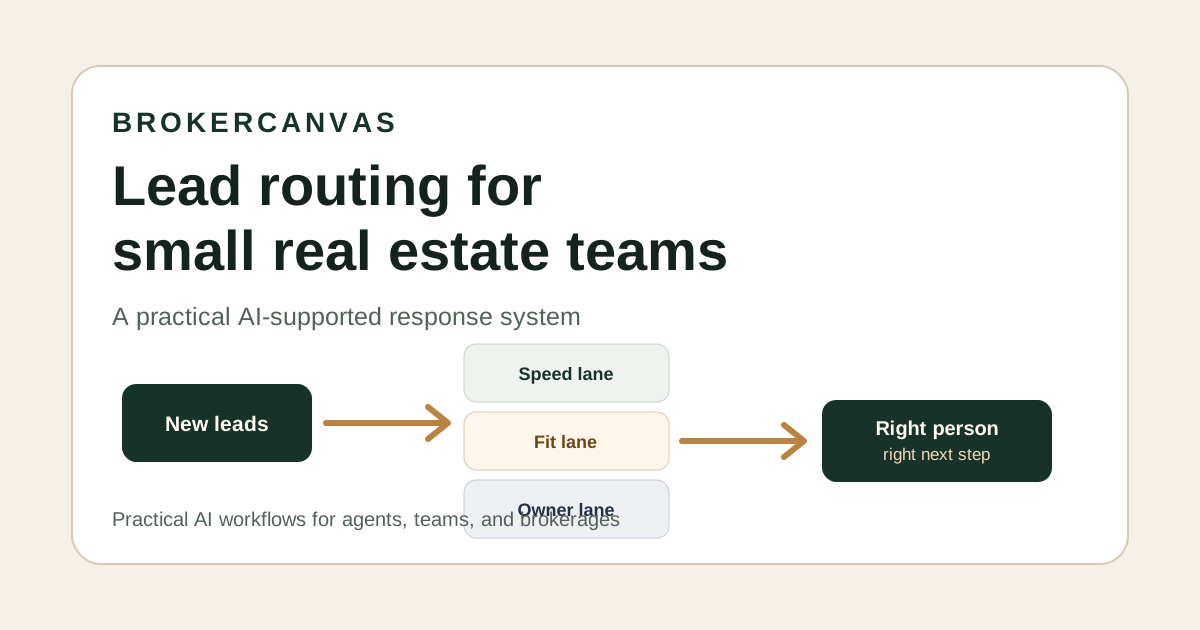
The win is not assigning leads faster. The win is making the next responsible person obvious.
The Right Way to Think About Lead Routing
Lead routing is not just a CRM setting. It is an operating rule for how the team protects opportunities.
Small teams usually need simple routing more than advanced automation. A five-person team with fuzzy rules can waste more leads than a solo agent with a messy spreadsheet. The issue is rarely the software first. The issue is that the team has not decided what should happen when a lead arrives.
AI can help with lead routing, but it should not own the relationship. Use it to summarize context, identify likely intent, draft the first follow-up, and flag missing information. The team still owns judgment, assignment rules, compliance, and client communication.
If your current system is "whoever sees it first," you do not have routing. You have luck.
If the inquiry begins in automated website chat, use the AI chatbot workflow for real estate agents to define approved answers, minimum data, transfer conditions, and the handoff record before routing rules assign an owner. If the inquiry arrives by phone, the AI voice assistant workflow for real estate agents adds automated identity, recording and transcription decisions, call testing, and no-answer fallback.
Where Small Teams Usually Break Down
Lead routing breaks in predictable places.
- No clear owner: several people can see the lead, but no one is accountable.
- No response standard: the team has not defined what counts as fast enough.
- No context handoff: the assigned agent gets a name and phone number but not the reason the person reached out.
- No backup rule: if the first agent misses the lead, there is no escalation path.
- No CRM cleanup: conversations happen by text, phone, and email, but the notes never make it back into the system.
- No lead quality language: hot, warm, cold, buyer, seller, investor, renter, and past client are treated the same.
The result is operational drag. The team spends energy asking "who has this?" instead of moving the conversation forward.
What AI Can Help With
AI is useful around the edges of lead routing because routing depends on reading context and turning it into a next step.
Use AI to help with:
- summarizing inquiry details from forms, emails, and notes
- classifying the likely lead type without pretending to know everything
- drafting a first response based on the source and intent
- creating a CRM note for the assigned agent
- writing a handoff note when one team member passes a lead to another
- building backup follow-up tasks
- spotting missing information before the agent responds
The point is not to automate your way out of human follow-up. The point is to give the right person a cleaner starting point.
What AI Should Not Do
Do not let AI decide who gets high-value leads without clear business rules. Do not let it make fair housing assumptions, infer protected-class information, invent motivation, or classify a person based on demographic guesses.
Do not let AI send client-facing messages without review if the message includes market claims, pricing, financing, legal, tax, inspection, appraisal, or brokerage-specific language.
The team needs rules first. AI can support the rules. It should not replace them.
A Practical Lead Routing Workflow
Here is the system I would build first for a small team.
Step 1: Define your lead lanes
Start with simple lanes. Do not create twenty categories that no one will maintain.
- Speed lane: new buyer or seller inquiry that needs immediate response.
- Relationship lane: past client, sphere, referral, or known contact.
- Listing lane: inquiry tied to a specific listing, showing, open house, or seller question.
- Investor lane: investor-friendly request, property analysis question, or deal math conversation.
- Nurture lane: longer-timeline lead that needs useful follow-up, not pressure.
These lanes are easy to understand. They also tell the team what kind of response matters.
Step 2: Assign ownership rules
Every lane needs a default owner. The owner can be a person, a role, or a rotation.
For example:
- New internet buyer lead: rotating buyer agent unless source says otherwise.
- Seller valuation request: listing specialist or team lead.
- Past client: original agent unless unavailable.
- Open house lead: hosting agent first, backup agent after a set time.
- Investor inquiry: assigned agent with property analysis workflow experience.
The exact rules are less important than writing them down. A clear rule that you improve later beats a perfect rule no one follows.
Step 3: Set response standards
Small teams need visible service levels. Not vague ones. Real ones.
- Speed lane: first response within 5 minutes when coverage is active.
- Relationship lane: same business day, faster if the message is urgent.
- Listing lane: same day with property-specific context.
- Nurture lane: useful follow-up within 24 hours.
If you cannot staff a five-minute standard all day, say that. Build the standard around reality. Fake standards only train the team to ignore the system.
Step 4: Create the handoff note
This is where AI can help immediately. A good handoff note should include:
- lead source
- what they asked for
- known timeline
- known property or area interest
- recommended first response
- missing information
- assigned owner
- backup rule
Most routing problems get worse because the assigned person gets too little context. The handoff note fixes that.
Step 5: Build the backup rule
If the assigned owner does not respond within the standard, the lead needs a backup path.
Do not make this emotional. Make it operational.
- If no claim in 5 minutes, notify backup agent.
- If no CRM task update in 15 minutes, alert team lead.
- If first conversation happens outside CRM, add note before end of day.
- If lead is misrouted, reassign with a written handoff note.
This is not about policing people. It is about protecting response quality.
Step 6: Review weekly
Once a week, review a small sample of routed leads:
- Was the right owner assigned?
- Was the response fast enough?
- Was the first message useful?
- Did the CRM record show the real next step?
- Did any lane need a better rule?
That review is where the system gets better. Without review, routing becomes another dusty CRM setting.
Example Prompt: Lead Routing Summary
Use this prompt after removing unnecessary private details. Keep your brokerage, CRM, privacy, and advertising rules in mind.
You are helping a small real estate team route a new lead.

Role:
Act as a practical real estate operations assistant. Summarize the lead, classify the likely routing lane, and prepare a handoff note for the assigned agent.

Guardrails:
- Do not infer protected-class information.
- Do not make fair housing assumptions.
- Do not invent motivation, budget, timeline, financing, or property facts.
- Do not provide legal, tax, lending, appraisal, inspection, or financial advice.
- Do not decide final assignment if the team rules are unclear.
- Flag missing information and uncertainty.
- The team lead or assigned agent will review before using.

Team routing rules:
- Speed lane:
- Relationship lane:
- Listing lane:
- Investor lane:
- Nurture lane:
- Backup rule:
- Response standard:

Lead details:
- Source:
- Name:
- Contact method:
- Message or inquiry:
- Property or area mentioned:
- Buyer, seller, investor, renter, past client, referral, or unknown:
- Timeline if known:
- Agent relationship if known:
- Notes from prior conversations:

Requested output:
1. Best-fit routing lane and confidence level.
2. Recommended owner based only on the routing rules provided.
3. Handoff note for the assigned agent.
4. First-response draft under 120 words.
5. CRM note.
6. Specific next task and due time.
7. Missing information to verify.
8. Escalation or backup action if the owner does not respond.
Example Prompt: First Response by Lead Lane
Once the lead is assigned, use AI to draft a better first response. The response should sound like a person, not a campaign.
You are helping me draft a first response to a real estate lead.

Lead lane:
[speed / relationship / listing / investor / nurture]

Known context:
- Source:
- What they asked:
- Property or area:
- Timeline:
- Relationship to team:
- Assigned agent:
- Missing information:

Tone:
Calm, direct, useful, and human. No hype. No pressure.

Guardrails:
- Do not make pricing, financing, appraisal, legal, inspection, or market guarantees.
- Do not invent facts.
- Do not use fair housing-sensitive language.
- Keep the message short enough to send by text or email.

Requested output:
1. Text message version.
2. Email version.
3. One useful follow-up question.
4. CRM task title.
5. Anything the assigned agent should verify before sending.Simple Routing Rules You Can Start With
Use these as a starting point, then adjust based on your team.
Rule 1: Relationship beats rotation
If the lead has an existing relationship with an agent, route to that agent first unless there is a clear reason not to. Past clients and referrals are trust-based. Do not treat them like random internet leads.
Rule 2: Speed leads need active coverage
If the team promises fast response, someone has to be responsible during coverage windows. A rotation only works if people are actually watching it.
Rule 3: Listing inquiries need property context
Do not send a listing inquiry to someone who has no idea what property the person asked about. The first response should reference the actual listing, showing path, or next available step.
Rule 4: Seller leads deserve senior review
Seller valuation and listing-prep inquiries often need pricing judgment, market context, and a careful next step. If newer agents handle them, give them a review path.
Rule 5: Reassignment needs a handoff note
"Can you take this?" is not enough. A reassignment should include what happened, what the lead wants, what has already been said, and what the next person should do.
Where This Fits in a Real Estate Team Workflow
Lead routing connects directly to the real estate CRM follow-up workflow. Routing decides who owns the lead. CRM follow-up decides what happens after the first touch.
For event-based leads, connect this to the open house follow-up workflow. For seller leads, connect it to the seller nurture email templates. For team consistency, document the routing rules using the real estate AI SOPs guide.
If routing is messy across your team, that is a strong sign you may need a practical AI workflow audit or team training, not just another CRM field.
The Best First Step
Do not rebuild your whole CRM this week.
Start with one lead source. Pick the source that causes the most confusion: website inquiries, open house leads, seller valuation requests, or referrals.
Write the lane, owner, response standard, backup rule, and handoff note format for that one source. Then test it for seven days.
If the team cannot follow the rule for one lead source, a bigger automation project will not fix it.
Final Takeaway
Lead routing is one of the simplest places for a small real estate team to improve revenue operations.
You do not need a complicated system to start. You need clear lanes, clear owners, useful handoff notes, backup rules, and a weekly review. AI can help summarize and draft, but the team still needs to own the rules.
Make the next responsible person obvious. That is where faster follow-up starts.