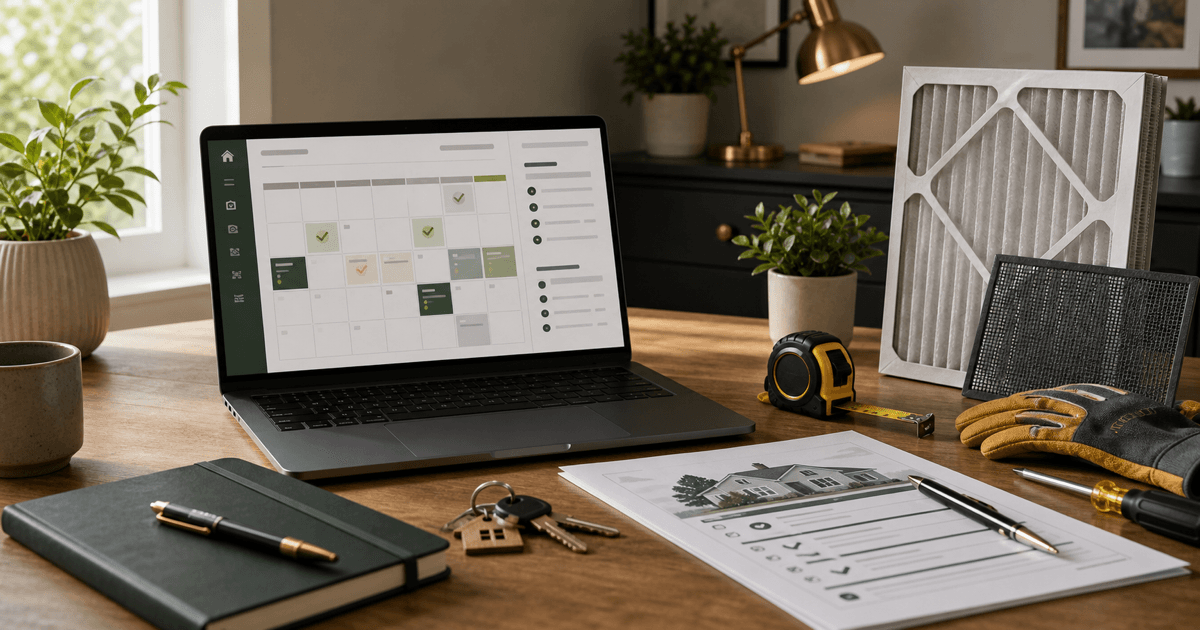
One of the easiest ways to stay useful after closing is also one of the easiest things to ignore: homeowner maintenance reminders.
Most past-client follow-up gets too vague. The agent sends a market update, a holiday note, or a soft referral ask. Sometimes that is fine. But homeowners also need practical reminders: change the HVAC filter, check gutters, test smoke detectors, review winter prep, document upgrades, and think ahead before small problems become expensive ones.
That is a better reason to reach out.
AI can help real estate agents turn home maintenance into a simple client-care workflow. It can organize seasonal reminders, draft short messages, create CRM tasks, and adapt the topic for past clients, sphere contacts, sellers, buyers, and homeowners in different property types.
My rule is simple: use AI to make the reminder useful, not to pretend you personally inspected the home.
Why Homeowner Maintenance Reminders Work
A good homeowner reminder does three things at once.
- It gives the client something practical.
- It keeps the agent present without a forced sales pitch.
- It creates a reason to update CRM notes and stay in the relationship.
That matters because repeat and referral business usually comes from being remembered as useful. Not loud. Not automated. Useful.
A homeowner may not need to buy or sell this month. But they may appreciate a seasonal checklist, a reminder to document improvements, or a short note about which maintenance items can affect future resale conversations.
What AI Can Help With
AI is useful here because the workflow is repetitive but still needs judgment.
It can help you:
- create seasonal homeowner maintenance checklists
- adapt reminders by property type
- draft short email and text versions
- turn one reminder into a monthly client-care calendar
- create CRM task notes and follow-up tags
- write homeowner-friendly explanations without sounding technical
- separate general home-care reminders from resale or listing-prep advice
- flag topics that need a licensed contractor, inspector, insurance professional, attorney, tax professional, or other expert
The best use is not "write 12 newsletters." The best use is "help me send one helpful reminder this month that sounds like me."
What AI Should Not Do
This is a low-drama workflow, but it still needs boundaries.
- Do not diagnose property defects.
- Do not give contractor, engineering, inspection, insurance, legal, tax, lending, appraisal, or safety advice.
- Do not tell a homeowner a maintenance item will increase resale value by a specific amount.
- Do not imply you know the condition of the home unless you actually do.
- Do not use fear-based language to create urgency.
- Do not send the same reminder to every homeowner if property type, climate, age, or ownership situation makes it irrelevant.
Keep the message practical. If something requires a professional, say that plainly.
A Practical AI Homeowner Maintenance Reminder Workflow
Here is the workflow I would use.
Step 1: Pick one maintenance theme
Do not start by building a massive annual campaign. Pick one useful theme for the month.
Examples:
- HVAC filter and service reminder
- gutter and drainage check
- smoke and carbon monoxide detector check
- winterization reminder
- spring exterior walk-around
- storm-season prep
- water shutoff and leak prevention
- home improvement documentation
- pre-listing maintenance planning
One focused reminder is easier to read and easier to send consistently.
Step 2: Define who should receive it
Not every reminder belongs to every contact.
Useful segments might include:
- recent buyers
- past clients who own single-family homes
- condo owners
- landlords or small investors
- older-home owners
- new-construction buyers approaching warranty milestones
- seller leads who are 6 to 12 months from listing
- sphere contacts who appreciate homeowner tips
This is where AI can help you map topic to audience. A condo owner probably does not need the same gutter reminder as a rural homeowner with outbuildings.
Step 3: Gather local and property-type context
Add the real context before asking AI to draft.
- season or month
- market or climate considerations
- property type
- home age range if known
- common homeowner questions you hear
- your preferred tone
- what you do not want the message to say
AI writes better when it knows the lane.
Step 4: Draft one short message
I would start with one email and one text version.
The email can explain the reminder in a little more detail. The text should be short enough to feel like a real note, not a campaign.
For example, the goal might be:
- one useful point
- one short checklist
- one professional-boundary note
- one soft offer to be a resource
You do not need to ask for referrals every time. Being useful is the long game.
Step 5: Add a CRM task and tag
A reminder is more valuable when it updates your system.
After sending, your CRM note might include:
- topic sent
- segment
- date sent
- next homeowner touch
- who replied
- who asked a property question
- who may need a vendor referral or professional resource
If someone replies with a real issue, do not let it disappear into your inbox.
Step 6: Review and personalize before sending
AI can draft the first version. You still need to make it sound like you.
I usually look for three things:
- Is the message too long?
- Does it sound like a generic homeowner newsletter?
- Does it accidentally make a claim I would not want to defend?
If yes, shorten it and make it more direct.
Example Prompt: Create a Homeowner Maintenance Reminder
Use this for one reminder at a time.
You are helping a real estate agent create a practical homeowner maintenance reminder.

Role:
Act as a client-care writing assistant. Do not diagnose home problems, give contractor advice, guarantee resale impact, or create fear-based urgency.

Reminder topic:
- Topic:
- Season/month:
- Location or climate context:
- Property type:
- Audience segment:
- Known client context:

Agent voice:
- Practical
- Friendly
- Direct
- No hype
- No pressure
- No fake urgency

Rules:
- Keep the message useful and short.
- Do not imply I inspected the home.
- Do not provide legal, tax, lending, appraisal, insurance, engineering, inspection, safety, or contractor advice.
- Tell the homeowner to consult a qualified professional when appropriate.
- Do not make guaranteed resale value claims.
- Avoid a heavy referral ask.

Create:
1. A short email version.
2. A short text message version.
3. A 3-5 item homeowner checklist.
4. A softer version for past clients.
5. A version for seller leads who may list in the next 6-12 months.
6. CRM task notes and tags.
7. A review checklist before sending.
Example Prompt: Build a 12-Month Homeowner Care Calendar
Use this after you have tested a few individual reminders.
You are helping a real estate agent build a 12-month homeowner care calendar.

Role:
Act as a practical client-care planner. The goal is to stay useful to past clients and homeowners without turning every touch into a sales pitch.

Market context:
- Location:
- Common seasonal issues:
- Common property types:
- Audience segments:
- Existing CRM tags:

Rules:
- Keep topics practical and homeowner-friendly.
- Avoid legal, tax, lending, appraisal, insurance, engineering, inspection, safety, or contractor advice.
- Do not make resale value guarantees.
- Include professional-review notes where needed.
- Make each month distinct.
- Include a light referral or real estate conversation only where it fits naturally.

Create:
1. A 12-month calendar with one homeowner topic per month.
2. The best audience segment for each topic.
3. A short email angle for each month.
4. A short text angle for each month.
5. CRM tags and task timing.
6. Topics that should include a professional-boundary note.
7. Three topics that can naturally connect to listing prep without sounding pushy.A Simple Monthly Homeowner Reminder Framework
You can use this structure for almost any maintenance reminder.
Opening
Keep it human and useful.
Example: "I wanted to send a quick homeowner note, not a sales pitch."
Reminder
Name the specific maintenance item and why it matters in plain language.
Checklist
Give three to five simple items the homeowner can review.
Boundary
If the topic involves safety, systems, repairs, insurance, or property condition, tell them to consult a qualified professional.
Soft close
Offer to be a resource without making the whole message about a referral.
Seasonal Ideas Agents Can Use
Spring
- exterior walk-around
- gutter and drainage check
- HVAC service planning
- roof or siding visual review from the ground
- documenting winter wear before repairs
Summer
- watering and landscaping notes
- humidity and ventilation reminders
- deck, patio, and outdoor maintenance planning
- storm-season preparedness
- vacation home security checklist
Fall
- furnace or HVAC filter reminder
- gutter cleanup
- winterization planning
- smoke and carbon monoxide detector check
- weatherstripping and drafts
Winter
- freeze prevention reminders
- home inventory and documentation
- project planning for spring
- utility shutoff awareness
- ice and drainage caution
Keep the reminders general unless you know the homeowner's situation. Property condition and safety questions belong with qualified professionals.
Common Mistakes Agents Make With Maintenance Follow-Up
Making every message a referral ask
That wears people out. A useful reminder can stand on its own.
Writing like a home inspector
You are not inspecting the property through an email. Keep the language general and route real concerns to qualified professionals.
Sending irrelevant reminders
A condo owner, investor, rural homeowner, and new-construction buyer may need different reminders.
Overbuilding the campaign
Twelve perfect emails sitting in a draft folder do not help anyone. Start with one useful monthly reminder.
Forgetting to update the CRM
The reply is often where the opportunity is. Track questions, vendor needs, future listing signals, and relationship notes.
Where This Fits With Other BrokerCanvas Workflows
This workflow sits after closing and before the next obvious real estate need.
Use the past client follow-up workflow when you need a broader relationship cadence. Use the referral database segmentation workflow to decide who should receive which reminder. Use the real estate CRM follow-up workflow to keep the tasks organized. Use the market update newsletter workflow when the monthly touch should focus on market context instead of home care.
For the broader system, start with AI for real estate agents. If you want a structured way to apply AI across follow-up, client communication, listings, and team workflows, the full BrokerCanvas training is the core path.
Homeowner Reminder Review Checklist
Before sending an AI-assisted homeowner reminder, ask:
- Is the topic relevant to this contact segment?
- Does the message sound like me?
- Is the reminder practical and short?
- Does it avoid diagnosing a property issue?
- Does it avoid legal, tax, lending, appraisal, insurance, engineering, inspection, safety, or contractor advice?
- Does it avoid guaranteed resale value claims?
- Does it include a professional-boundary note where needed?
- Is the referral ask light or absent?
- Did I create the CRM task and next follow-up?
If the message feels like a generic newsletter, tighten it. If it feels like advice outside your lane, add boundaries or do not send it.
The Best First Step
Pick one homeowner segment and one maintenance topic.
For example: recent buyers and a fall HVAC filter reminder. Ask AI for one short email, one text version, a three-item checklist, and a CRM task note. Review it in your own voice, then send it to a small group.
That is enough to start the habit without turning it into a complicated campaign.
Final Takeaway
AI can help real estate agents turn homeowner maintenance reminders into a useful past-client and sphere follow-up system.
It should not diagnose homes, give professional advice, create fear, or make every touchpoint a referral ask.
The useful version is simple: pick one relevant reminder, write it clearly, review it in your own voice, and use the response to keep the relationship current.