Buyer communication usually breaks down in the spaces between appointments.
The buyer consultation goes well. The client understands the big picture. Then the search starts, listings move quickly, emotions get involved, and the same questions come back in pieces: What should we look for at the showing? How aggressive do we need to be? What happens after we write an offer? Why did that house sell so fast?
That is where a simple buyer education sequence helps.
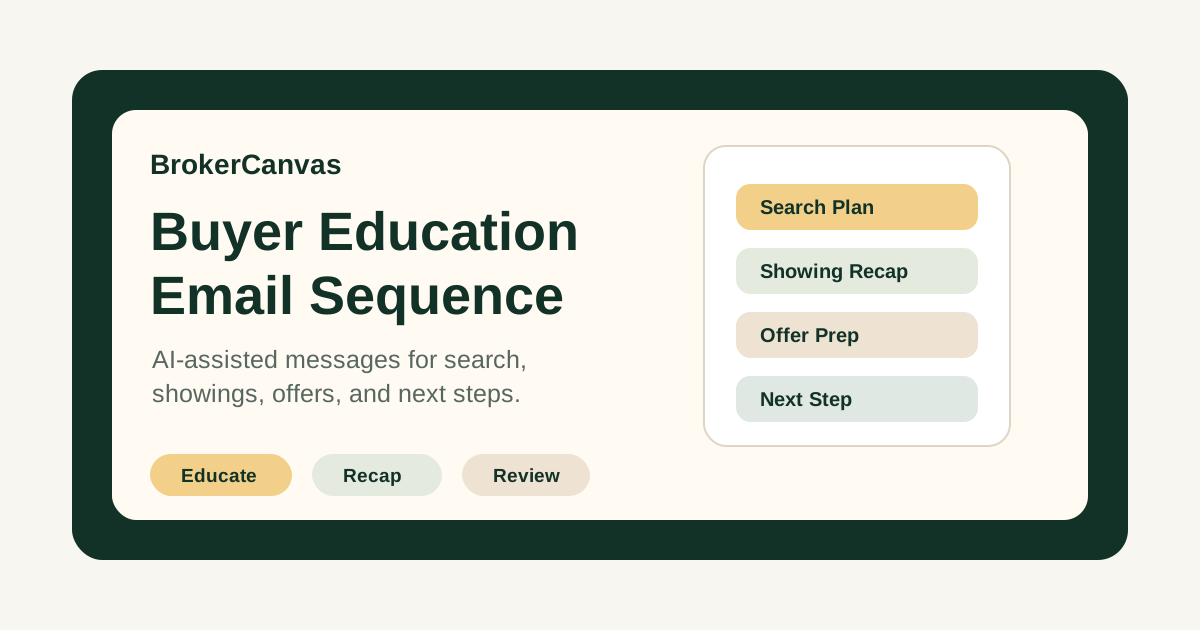
An AI buyer education email sequence for real estate agents should not replace your advice or turn every buyer into a drip campaign. It should help you explain the process clearly, recap what happened, and prepare clients for the next decision before they are stressed.
Good buyer education does not make the client feel managed. It makes the next step feel less confusing.
The Right Way to Use AI for Buyer Education
AI is useful when you already know the buyer, the market context, and the purpose of the message.
Use it to:
- turn your buyer consultation notes into a useful search-plan email
- draft showing recaps from your actual observations
- explain process steps in plain language
- create message variants for email, text, and CRM notes
- prepare buyers for offer conversations without making promises
- summarize what needs professional review
- keep your tone consistent without sounding canned
Do not ask AI to invent local market facts, lending advice, legal advice, inspection advice, appraisal guidance, or guaranteed outcomes. The agent still owns the communication.
What Makes a Buyer Education Sequence Useful
A useful buyer sequence has three jobs.
First, it reduces uncertainty. Buyers do not need a lecture. They need to know what matters next.
Second, it creates better decisions. A buyer who understands tradeoffs is less likely to panic over every listing or freeze when a good home appears.
Third, it protects your time. When the common explanations are clear, you spend more energy on the specific situation instead of repeating the same baseline context.
That is the balance: educate once, personalize every time it matters.
What AI Should Not Do
Buyer education touches financing, contracts, inspections, fair housing, local rules, and personal decision-making. Keep the guardrails visible.
Do not use AI to:
- tell a buyer what they can afford
- give lending, tax, legal, appraisal, inspection, insurance, or financial advice
- write steering language around neighborhoods, schools, crime, protected classes, or demographics
- make promises about prices, negotiations, repairs, appraisal, financing, or closing
- invent market data, showing feedback, seller motivation, or listing facts
- pressure buyers into writing offers
- skip broker, lender, attorney, inspector, title, MLS, fair housing, or brokerage review where needed
If the message affects a major decision, use AI for a draft and your professional process for the final answer.
A Practical Buyer Education Email Sequence
This sequence is built for agents who want a repeatable buyer communication system without overwhelming clients.
Email 1: The search plan recap
Send this after the buyer consultation or search reset.
Purpose: confirm what matters, set expectations, and reduce confusion before listings start hitting the inbox.
Include:
- the buyer's top priorities
- must-haves versus flexible preferences
- target areas or property types, if appropriate
- budget or financing assumptions only if verified and appropriate
- how showings will be handled
- what a good next step looks like
This pairs naturally with the buyer consultation prep workflow. That article helps you prepare for the appointment. This email turns the appointment into a clean next step.
Email 2: How to evaluate a listing
Send this early in the search, especially to first-time buyers or buyers entering a fast market.
Purpose: teach buyers how to look beyond photos and focus on fit, tradeoffs, condition, location, monthly cost, and resale considerations.
Keep it practical. Buyers do not need a textbook. They need a quick mental checklist before they ask to see every attractive listing.
Email 3: Showing recap and next step
Send this after a meaningful showing day or when a buyer is comparing two or three options.
Purpose: organize what the buyer saw, what stood out, what needs more information, and what the next decision is.
Use AI carefully here. Feed it your actual showing notes. Do not let it invent property details or imply certainty about condition, repairs, seller motivation, or value.
Email 4: Offer-readiness primer
Send this before a buyer is ready to write, not after everyone is already anxious.
Purpose: explain what an offer conversation may include: price, timing, contingencies, financing, earnest money, inspection strategy, appraisal risk, occupancy, and other terms that need review.
This is not legal or lending advice. It is process education. The buyer should understand what questions may come up and which professionals may need to weigh in.
Email 5: After-offer recap
Send this after an offer is submitted or after a competitive offer conversation.
Purpose: summarize what happened, what is known, what is not known, and what the buyer should expect next.
Avoid emotional overpromising. A good after-offer email keeps the buyer grounded.
Email 6: Under-contract next steps
Send this after acceptance, after your brokerage-required communication, and after you verify the facts.
Purpose: explain immediate next steps, who is involved, what deadlines need verification, and what the buyer should watch for.
This connects directly to the AI transaction coordination checklist. Once a buyer is under contract, the communication shifts from education to file management and deadline review.
Example Prompt: Buyer Education Sequence Builder
Use this when you want to turn real buyer notes into a usable sequence.
You are helping me create a buyer education email sequence for a real estate client.

Role:
Act as a practical real estate communication assistant. Help me explain the buying process clearly without inventing facts or giving professional advice outside my role.

Guardrails:
- Use only the facts I provide.
- Do not invent market data, listing details, buyer motivation, seller motivation, prices, deadlines, or financing details.
- Do not provide legal, tax, lending, appraisal, inspection, insurance, title, or financial advice.
- Avoid steering language related to neighborhoods, schools, crime, protected classes, or demographics.
- Do not make promises about offer success, negotiation outcomes, repairs, financing, appraisal, or closing.
- Mark anything that needs broker, lender, attorney, inspector, title, MLS, fair housing, or compliance review.
- Keep the tone practical, calm, and easy to understand.
- The agent will review before sending.

Buyer context:
- Buyer type:
- Timeline:
- Financing status:
- Search criteria:
- Priorities:
- Tradeoffs:
- Areas/property types:
- Current stage:
- Questions or concerns:
- Details to avoid:

Requested output:
Create a 6-email buyer education sequence:
1. Search plan recap.
2. How to evaluate a listing.
3. Showing recap and next step.
4. Offer-readiness primer.
5. After-offer recap.
6. Under-contract next steps.

For each email include:
- subject line
- purpose
- email draft under 180 words
- optional text message version
- facts to verify before sending
- items that need professional reviewExample Prompt: Showing Recap Email
This is useful after a showing when your notes are scattered.
Help me draft a buyer showing recap email.

Use only these facts:
- Buyer name:
- Properties shown:
- Buyer reactions:
- Strengths noticed:
- Concerns noticed:
- Questions to answer:
- Next decision:
- Anything to avoid:

Guardrails:
- Do not invent property facts or condition issues.
- Do not make price, value, inspection, appraisal, financing, or legal claims.
- Keep it calm and useful.
- Separate facts from observations.
- Include a clear next step.

Output:
1. Email under 150 words.
2. Text message under 320 characters.
3. CRM note.
4. Questions I should answer before advising the buyer.
Five Buyer Email Angles Agents Can Reuse
1. The expectation-setting email
Use this when buyers are new to the process or re-entering the market after a break. Explain how the search will work and what information you will use to adjust the plan.
2. The tradeoff email
Use this when buyers want everything but the market is forcing prioritization. Help them separate true needs from preferences without sounding dismissive.
3. The showing recap email
Use this after a meaningful showing block. It helps buyers remember what they saw and turns emotional reactions into clearer next steps.
4. The offer-prep email
Use this before the right home appears. Buyers make better decisions when they already understand the parts of an offer conversation.
5. The not-the-one email
Use this when a buyer is discouraged after passing on a home or losing one. Keep the tone grounded. Recap what you learned and what changes in the search plan.
How This Fits With Other BrokerCanvas Workflows
Buyer education is part of a larger communication system.
Use the buyer consultation prep workflow before the first serious conversation. Use the real estate AI email templates guide when you need message structure. Use the AI compliance checklist before publishing or sending anything sensitive. Use the transaction coordination checklist when a buyer goes under contract.
If you want a deeper system for applying AI across follow-up, listings, communication, content, and operations, the BrokerCanvas training is the core path. If you want the lighter first step, download the free guide to practical AI use cases for real estate agents. For teams that need consistent buyer communication standards, start with an AI Readiness Audit or a real estate AI workshop.
A Simple Review Checklist Before Sending
Before you send an AI-assisted buyer email, check:
- Did AI invent any fact, deadline, market detail, buyer priority, or property detail?
- Does the message sound like you?
- Is the next step clear?
- Does it avoid steering language?
- Does it avoid legal, lending, tax, appraisal, inspection, insurance, title, or financial advice?
- Does anything need broker, lender, attorney, inspector, title, MLS, fair housing, or compliance review?
- Would this message still make sense if the buyer forwarded it?
If the email feels too polished or too broad, shorten it and add one real detail from the buyer's situation.
The Best First Step
Start with one email, not a six-month drip campaign.
Pick one active buyer. Write a simple search plan recap using your real notes. Ask AI to turn it into a clear email, a short text, and a CRM note. Review it. Cut anything generic. Send only what you would be comfortable explaining.
Once that works, build the rest of the sequence.
Final Takeaway
AI can help real estate agents educate buyers more consistently. It can turn notes into clearer emails, organize showing recaps, explain process steps, and prepare clients for decisions.
But the agent still owns the advice.
Use AI to make buyer communication clearer. Use your judgment, local expertise, and professional review to make it worth sending.